

Prisons are not the most pleasant places in the world, and no one wants to end up there. However, prisons are essential for modern society, as criminals and offenders need somewhere to serve their sentences. In fact, prisons have existed for centuries. For example, the Mamertine Prison is considered the oldest in the world, dating back to the 4th century BC. Today, we will discuss the men’s prison HM Prison Leeds, located on Gloucester Terrace in the Armley district of Leeds. Learn more about the history of this institution on leeds-future.com.
The Creation of Leeds Prison
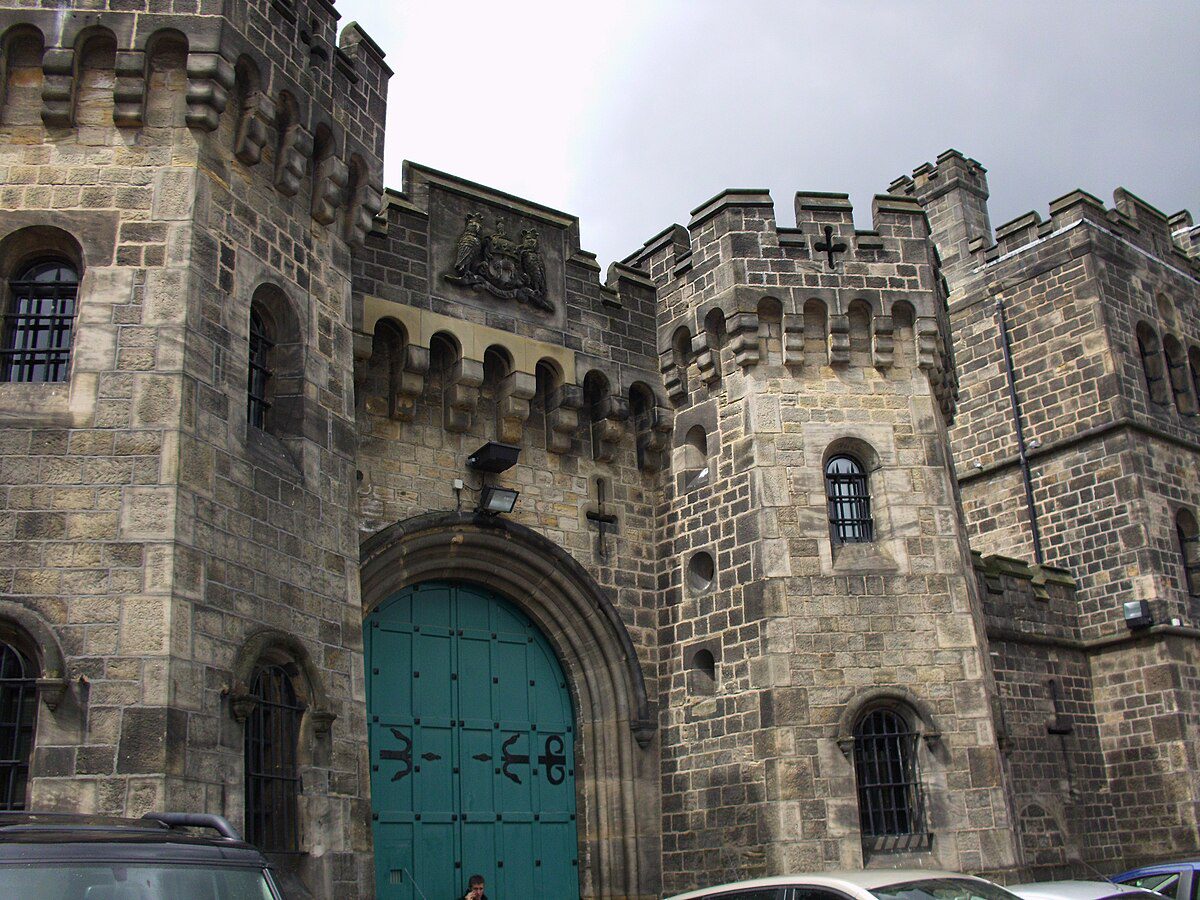
The history of HM Prison Leeds begins in 1847, the year its construction was completed. The prison building was constructed using stone quarried locally. Initially, the structure had four wings, though changes were made over time.
From 1847 to 1961, executions were carried out in the prison. The last execution at HM Prison Leeds took place on 29 June 1961 when Zsigmond Pankotai was hanged for murdering a 50-year-old man.
It is worth noting that this men’s prison in Leeds is also a heritage landmark. In 1976, the entrance and the 200-metre wall were listed as Grade II heritage structures.
Two additional wings were added to the prison in 1994, and a new gate complex was opened the same year. Nine years later, the old part of the building underwent renovation.
Insights into the Prison
The reputation of HM Prison Leeds is not particularly optimistic. For instance, in 2003, a study by the Prison Reform Trust found the prison had the highest rate of drug use among inmates in England and Wales. Statistically, 28.3% of inmates at HM Prison Leeds used drugs. The following year, an inmate was murdered by his cellmate. After this incident, the prison was under close scrutiny, and in 2005 it was reported that HM Prison Leeds ranked second among all prisons in England and Wales for suicide rates. Between 1995 and 2004, 25 inmates took their own lives.
In 2008, Leeds Prison faced criticism again, this time from Her Majesty’s Chief Inspector of Prisons, who spoke negatively about the conditions for inmates. According to the inspector, prisoners spent only two hours outside their cells each day. Two years later, a follow-up inspection found improved conditions and relationships between staff and inmates. However, issues with drug use among inmates were still recorded.
The administration acknowledged its mistakes, and in 2013, HM Prison Leeds became the first prison in the country to receive the Leaders in Diversity Award from the National Centre for Diversity.
The prison places significant emphasis on supporting inmates after their release. Special staff assess housing needs, provide health and lifestyle support, and assist former inmates in finding employment, housing, and more.
Overall, the prison has the capacity to house up to 1,212 inmates. It includes six residential blocks, an isolation unit, a medical facility, and more.
HM Prison Leeds may not be the most pleasant architectural landmark in Leeds, but it is part of our history. Built centuries ago, parts of the building are listed as Grade II heritage structures.
We hope this article has been informative and that you have learned something new about your city. We wish you never have to experience such a place personally, but as the saying goes, “Never say never.”
Did you know about this architectural landmark in Leeds? Share your thoughts in the comments.