

Leeds is a magnificent city with distinctive architecture that draws countless tourists eager to immerse themselves in its atmosphere, visit landmarks, and explore its parks and squares. The architecture of Leeds encompasses a wide range of styles and notable buildings. Today, we will delve into the unique architectural features of this remarkable city. Learn more on leeds-future.com.
Overview of Leeds Architecture
Visitors to Leeds are often captivated by the city’s stunning architecture, much of which dates back to the Victorian era. However, the city also boasts structures from the medieval period.
Many of Leeds’ buildings are products of the Industrial Revolution and post-war reconstruction. The city centre, in particular, has seen a rise in skyscrapers and modern buildings.
In earlier centuries, Leeds’ structures were built primarily using granite, brick, and sandstone, with wood and thatch used for simpler constructions. Concrete and steel became prominent only in the 20th century.
Oldest Buildings in Leeds
Leeds has structures dating as far back as 3500 BC. The oldest is the Iron Age earthworks fort at Barwick-in-Elmet, reflecting the city’s history as part of the Roman settlement of Cambodunum. Other notable historic buildings include:
- Church of St. John the Baptist in Adel: One of the oldest buildings in Leeds, built between 1150 and 1170. Made of clay stone with a slate roof, it remains a key historic landmark.
- Kirkstall Abbey: Begun in 1152 on the banks of the River Aire, this abbey was dissolved and partially destroyed over time. The remaining ruins showcase Norman architecture with Gothic elements and decorations. Now a museum, it offers visitors a glimpse into the region’s medieval past.
- Church of St. John the Evangelist: Founded by John Harrison and consecrated in 1634, this church no longer holds services but is maintained by the Churches Conservation Trust. Its architecture continues to fascinate residents and visitors.
- Harewood House: Constructed between 1759 and 1771, designed by John Carr of York, with interiors by Robert Adam. Used as a hospital during World War II, it later became a public attraction hosting concerts and events. In 2009, Harewood House won the “Tourism Attraction of the Year” award at the England Excellence Awards.
Expansion of Leeds in the 19th and 20th Centuries
Leeds experienced significant growth during the 19th century as its population increased, transforming it into one of the largest cities in the UK. The wool and textile trade fueled the construction of numerous industrial buildings, including:
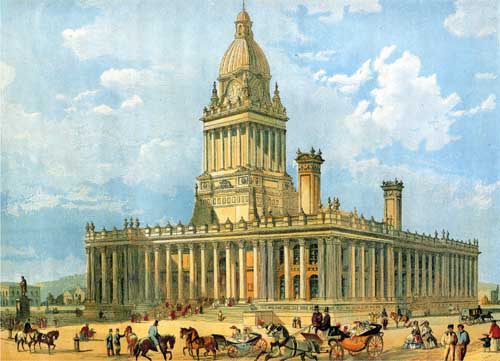
- Leeds Town Hall: A symbol of Victorian Leeds’ power and success, the town hall was designed by architect Cuthbert Brodrick and built between 1853 and 1858. Opened by Queen Victoria, it is one of the largest town halls in the UK and a Grade I listed building.
- Kirkgate Market: The largest covered market in Europe and a Grade I listed site. Opened in 1822 as an open-air market, it later included covered sections from 1850. The market expanded further in 1875, selling a wide variety of goods.
- The Met Hotel: Originally opened as the “Metropole” in 1899, this Grade II listed building was designed by Harry Sutton Chorley and J. Connon. Renovated in 2005 at a cost of £6 million, it was renamed “The Met.”
- Leeds City Varieties Music Hall: Built in 1865 as an extension to the “White Swan Inn” hotel, this venue was designed by George Smith for Charles Thornton. It is a rare example of a Victorian-era music hall.
Leeds offers an incredible array of breathtaking and unique architectural landmarks. However, seeing them in person is far more rewarding than hearing about them. Plan a weekend trip to Leeds and experience the city’s exceptional charm.
We hope this article has been insightful and provided you with new knowledge about Leeds. Which architectural landmarks in Leeds are your favourites?