
Leeds is one of the largest cities in the United Kingdom and plays a vital role as a major logistical and economic centre. Today, we take a closer look at the M1 motorway and its impact on the development of our city. As one of the UK’s key transport arteries, the M1 connects the north and south of the country. Learn more at leeds-future.com.
The History of the Motorway
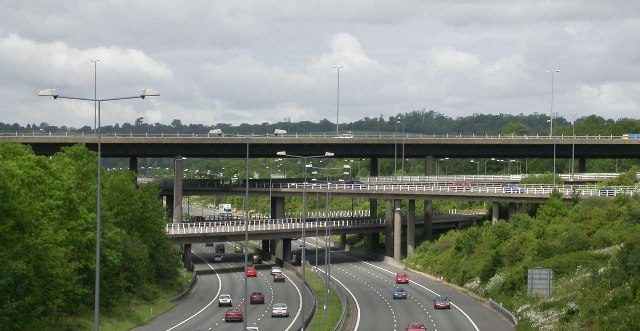
The M1 motorway is the UK’s first intercity motorway and became a symbol of the mid-20th-century transport revolution. The idea for such a road emerged even before the Second World War, when initial proposals were made for high-speed roads to connect the country’s major cities.
In 1923, Lord Montagu founded a company with the aim of constructing a motorway-style road between London and Birmingham. However, no real progress was made until the passing of the Special Roads Act in 1949, which officially permitted the construction of motorways in Britain. A decade later, in 1959, the first section of the M1 was opened, running from south London to north Leicester.
Construction of the motorway took place in stages, and by 1968 the full M1 was completed. The motorway passes through Leeds, where it connects with the A1(M) near Aberford, providing further access to northern regions including Newcastle. In total, the M1 stretches 311 kilometres (193 miles).
The Significance of the M1
At the time of its construction, the M1 incorporated the most advanced road-building technologies available, including asphalt concrete surfacing, which ensured both durability and safety. Key upgrades followed, including the modernisation of the southern section in 1977 and the northern section in 1999. Notably, in 1999, part of the motorway in Leeds was renamed the M621 to better integrate with the local transport network.
The motorway dramatically reduced travel times between the north and south of England. This had a profoundly positive effect on the economy, stimulating trade and logistics. The M1 opened up new opportunities for fast freight and passenger transport—an essential development for industrial cities like Leeds. With this improved infrastructure, Leeds quickly emerged as one of the UK’s leading financial and industrial hubs.
Moreover, the integration of the M1 with local roadways, including the Leeds Ring Road and the M621, allowed for better traffic distribution, relieving pressure on the city centre and improving overall transport services. This also led to environmental improvements and a higher quality of life for residents.
Before the arrival of the M1, Leeds was already a key transport hub in the north of England, boasting an extensive network of railways, canals, and local roads. This had supported the city’s industrial and commercial development. However, the M1 introduced faster freight and passenger connections, reducing travel times and cutting logistics costs. This made Leeds more attractive to investors, spurred business growth, and increased trade volumes.
In addition, transport links with London and the southern regions were significantly enhanced. As a result, Leeds saw the emergence of new office developments, logistics hubs, and manufacturing facilities—further boosting economic growth. The motorway also played a role in the expansion of tourism and services, by offering convenient access for visitors and business partners alike.

