

Disasters are happening more and more often in the modern world. Such events are difficult to get through, but it is at such moments that you appreciate life the most. Rail disasters occupy a special place in the history of Great Britain, as they result in terrible consequences. In this article, we will tell you about the large-scale rail disaster called the Selby rail crash, which occurred in North Yorkshire (near Leeds) on February 28, 2001. Learn more about it at leeds-future.com.
Worst rail disaster in Great Britain
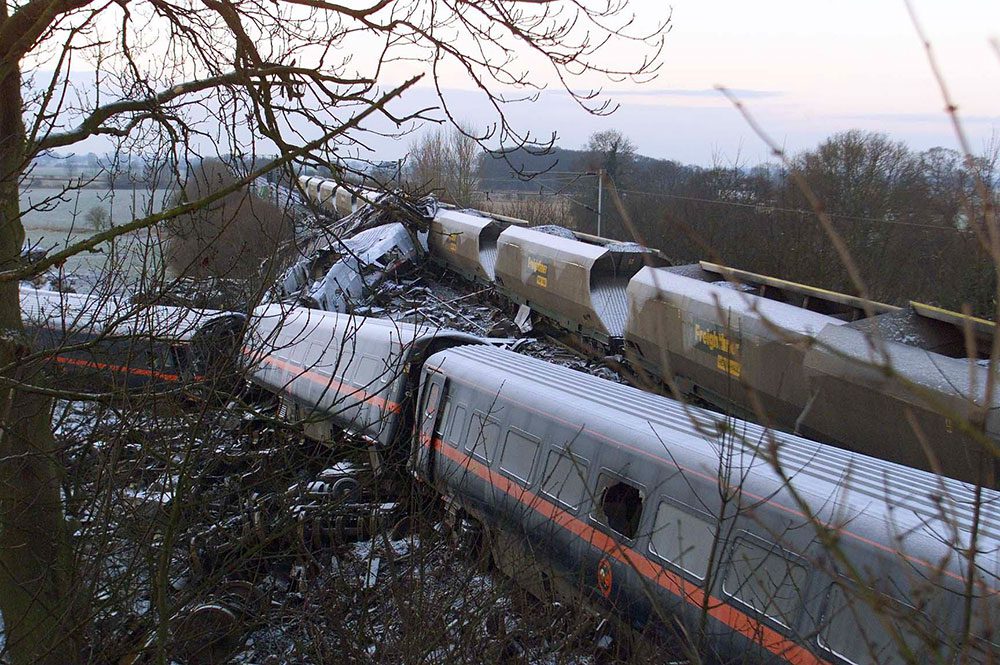
The Selby rail crash is considered the worst rail disaster in 21st-century Britain. In this article, we will try to find out the development of the events.
The InterCity 225 passenger train ran 1F23 GNER from Newcastle to London King’s Cross. The total number of passengers was 99 people. The train consisted of nine Mark 4 coach cars.
The other participant in the crash was a freight train, running 6G34. It consisted of 16 fully loaded coal cars.
A Land Rover Defender was a key participant in the Selby rail crash. The car driven by 36-year-old Gary Hart was towing a Renault Savanna.
On 28 February 2001, at approximately 06:13, the car left the westbound carriageway of the motorway before a bridge over a railway line. The car slid off an embankment onto the southbound railway line. The driver couldn’t get off the railway and called the emergency services. At that moment, an InterCity 225 crashed into the Land Rover. The train derailed and turned onto the oncoming railway line as a result of the collision. Then the freight train collided with the InterCity 225.
The collision killed both drivers, two additional train crews on board the InterCity 225 and six passengers. Andrew Hill, a driver in the cab of the freight train, was lucky to survive. He was watching the actions of an experienced driver who was studying the new route. In addition, 82 people received injuries of varying severity.
What was next?
Her Majesty’s Railway Inspectorate was notified of the accident at 06:55. Four inspectors arrived at the scene of the tragedy within a few hours. As a result of the investigation, no defects in any railway infrastructure that could have influenced the outcome of the accident were found. The motorway also met all safety standards. The investigation revealed that the driver of the car simply fell asleep at the wheel and therefore the vehicle drove onto the railway tracks.
Gary Hart was tried at Leeds Crown Court. The driver was charged with ten counts of causing death by dangerous driving. The man pleaded not guilty, but the prosecution claimed that he fell asleep at the wheel. It turned out that the night before the trip, the accused had been on the phone for five hours talking to a woman he had met on the Internet. Accordingly, Hart hadn’t slept all night and got into the car 90 minutes after the phone call ended.
The investigation showed that the driver didn’t follow proper safety precautions while driving, which led to catastrophic consequences. It also found no defects in the railway infrastructure that could have contributed to the disaster. It emphasised that the main responsibility lay with the driver of the passenger car.
The driver denied all charges and stated that he didn’t fall asleep and could have gone without sleep for 36 hours. On 13 December 2001, Gary Hart was sentenced to five years in prison and banned from driving for five years. He was released in July 2004 having served only half of his sentence.
Insurers paid out £30 million in compensation for the accident.
Terrible consequences of the disaster
This tragedy has taken the lives of ten people and they will never be returned. Still, locomotives were named after the drivers and were installed with memorial plaques. For example, a Class 66 locomotive 66526 was named after the driver Steve Dunn (George). It is worth noting that his son, who was nine years old at the time of the accident, later became a driver too.
A locomotive 56115 was named after Barry Needham.
Passenger train driver John Weddle was also honoured when a new driving school was named after him in his native Newcastle. A stone memorial garden with a memorial plaque was also installed near the crash site.
New safety guidelines were developed after the disaster. Car drivers have started to be tested for fatigue and other factors that can affect road safety. As for the railway infrastructure, the signalling and train control systems have also undergone some improvement.
The Selby rail crash is considered the worst rail accident in the 21st-century UK. We hope that such a tragedy will never happen again and everyone involved has learned their life lessons.