

Every European city has a central square, often a paved area serving as a key tourist attraction. Leeds is no exception, boasting City Square, located north of the railway station at the junction of Park Row to the east and Wellington Street to the south. Today, we’ll explore the history and unique features of this triangular space where six roads converge. Learn more about Leeds City Square on leeds-future.com.
History of City Square
The history of City Square dates back to 1893 when plans were proposed to develop a square in front of the station. At the time, cloth halls and Quebec House in this area were demolished. By 1896, a new General Post Office was built, accompanied by a small parcel of land for the square.
Originally, there were proposals to name the square after John Smeaton, a renowned local engineer. However, the council chose to call it City Square, reflecting Leeds’ growth into a major city.
The initial design included tram waiting rooms and public toilets, but the Lord Mayor of Leeds, Thomas Walter Harding, rejected this plan. Instead, he commissioned William Bakewell to design an Italian-inspired square featuring statues and trees.
During World War II, City Square suffered significant damage in a Luftwaffe air raid on Leeds. It also housed an air raid shelter during the war.
In 2003, City Square was refurbished, with one side closed to traffic. Statues and fountains were added, though the fountains were removed a decade later.
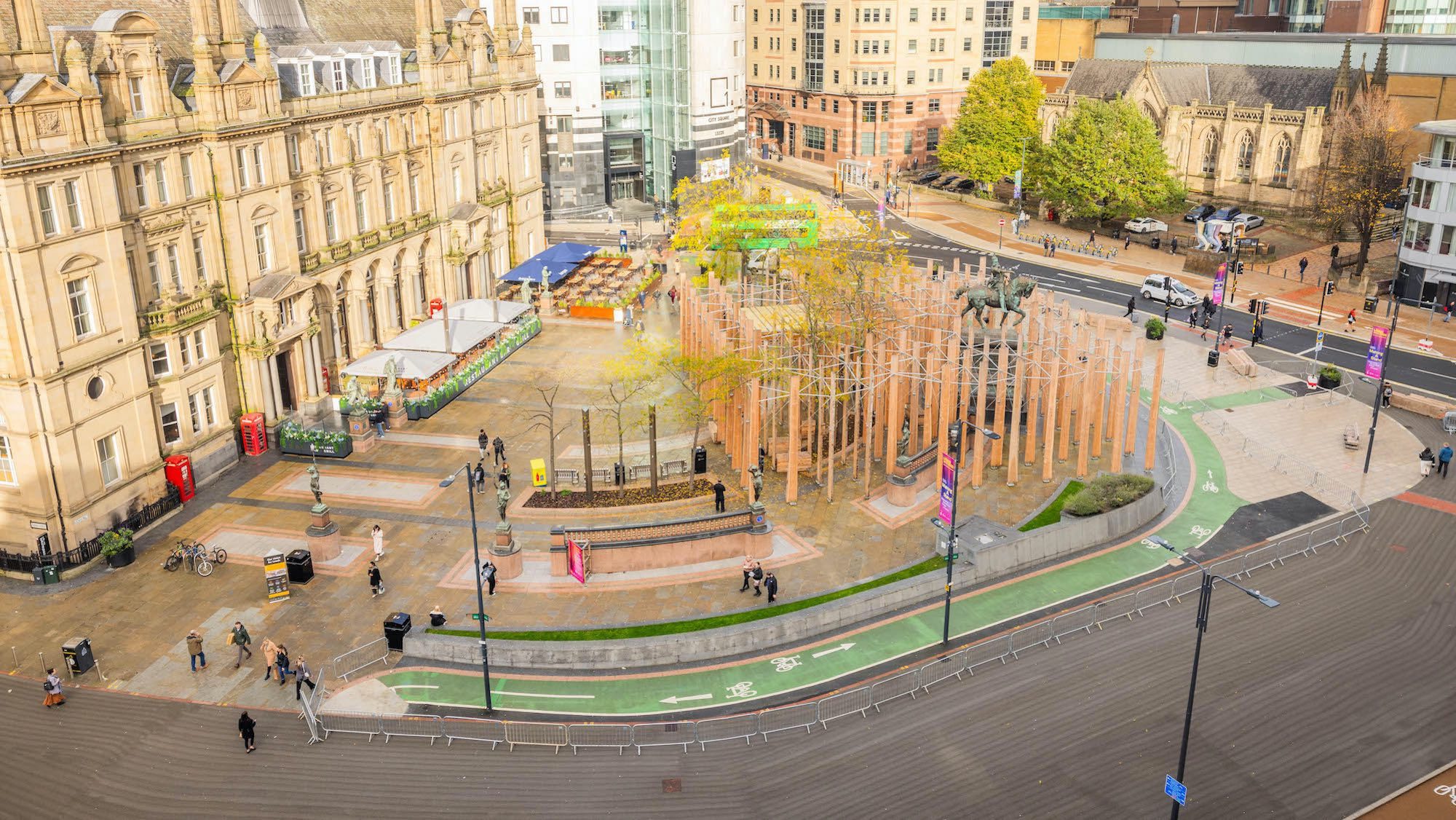
What to See on City Square
Leeds City Square is home to several statues and other fascinating features, many of which are Grade II listed:
- The Black Prince: This grand equestrian statue of Edward, the Black Prince, is a central feature of City Square and a notable work by Thomas Brock. Although the prince had no connection to Leeds, the statue, funded by Colonel Thomas Walter Harding, was cast in Belgium and unveiled on 16 September 1903.
- Statue of James Watt: The famous engineer, who revolutionized industrial technology, is commemorated with a statue despite having no ties to Leeds. It was unveiled in 1903, symbolizing technological advancements that shaped the city.
- John Harrison: A statue of the local cloth merchant and philanthropist who built a church and grammar school in Leeds. This statue was also unveiled in 1903.
- Statue of Dr. Walter Hook: Recognised for his contributions to religion and education in Leeds, Hook oversaw the rebuilding of the parish church and 30 schools. His statue was unveiled in 1902.
- Statue of Joseph Priestley: The renowned chemist and theologian lived in Leeds from 1767 to 1773. His statue, like many others, was unveiled in 1903.
- The Eight Nymphs: These controversial statues of nude women holding lamps were installed in 1899. Over the years, their placement has shifted, and in the 1990s, there was an attempt to remove them altogether, which was met with public resistance.
City Square is also surrounded by notable architectural landmarks, including:
- Queens Hotel: A Grade II listed building.
- Modern skyscrapers: Adding a contemporary touch to the square’s skyline.
- City Square No. 1: A prominent office building.
- Former Majestic Cinema and Ballroom: Now repurposed but retaining its historical charm.
- Park Plaza Hotel: A luxurious addition to the square.
- Former Yorkshire Bank headquarters: Another architectural highlight.
City Square stands as a testament to Leeds’ evolution and resilience, from its Victorian grandeur to its modern urban design. We hope this article has offered you an engaging look into the square’s rich history and development.
Do you enjoy strolling through Leeds City Square?