

Leeds is home to a wide range of architectural landmarks, historic buildings, and fascinating sites. Among these, its churches and cathedrals hold a special place. Today, we focus on Leeds Cathedral, a structure of great architectural and liturgical significance, standing on the site of the city’s oldest church. References to a church at this location date back to the 7th century. Learn more about the history of Leeds Cathedral on leeds-future.com.
The Cathedral’s Origins
The first recorded mention of the church dates back to 1086, though it is believed to have been constructed much earlier. Excavations have revealed fragments of Anglo-Scandinavian stone crosses, suggesting earlier activity on the site.
The church has been rebuilt twice. The first reconstruction occurred in the 14th century after a fire, and the second in the 19th century under the guidance of Walter Farquhar Hook, Vicar of Leeds. The architect behind the project was Robert Dennis Chantrell.
Initial plans in November 1837 aimed to modify the existing structure, including moving the tower to the north side, enlarging the chancel, and raising the north nave roof. However, as work progressed, structural weaknesses were discovered, prompting a complete rebuild. The new structure became the largest church built in England after St. Paul’s Cathedral.
The new church was funded entirely by voluntary contributions from Leeds residents, with a budget exceeding £29,000. It was consecrated in September 1841. The parish church officially became a cathedral in September 2012, marking the 171st anniversary of its consecration.
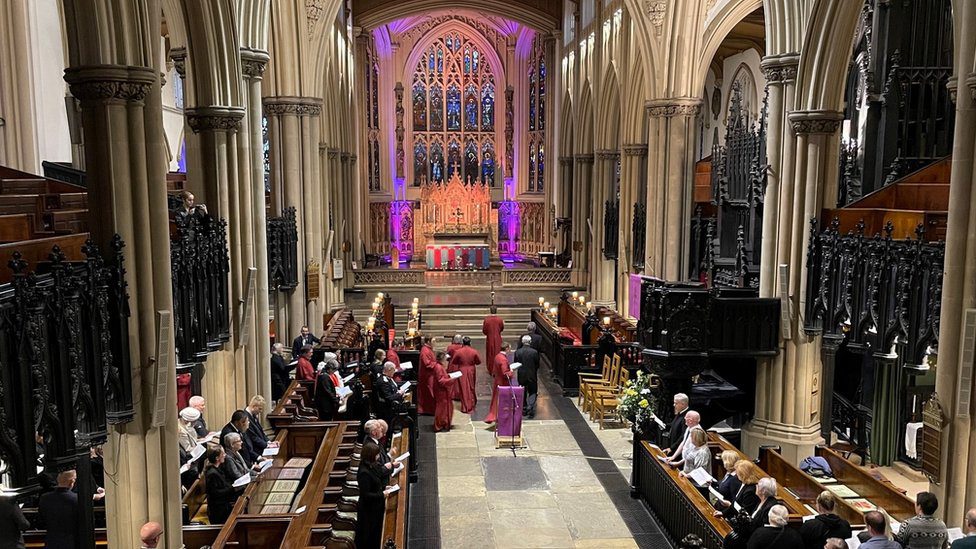
Exquisite Architecture
The cathedral measures 55 metres in length and 26 metres in width, with a 42-metre-high tower. The chancel and nave each have four bays of equal length, featuring windows and high arcades.
The tower comprises four uneven stages with side panels and corner buttresses, and the main entrance to the cathedral is located beneath it. The windows showcase intricate perpendicular tracery, with a five-light east window installed in 1846. Inside, visitors can admire a marble arch adorned with a Venetian mosaic crafted by Salviati.
The cathedral’s bells were cast in 1842, with a set of 13, later re-tuned in 1932. Notable interior features include the Leeds Anglo-Saxon Cross and a brass plaque commemorating Captain Oates of Scott’s Antarctic Expedition. The cathedral is a Grade I listed building, reflecting its historic and architectural importance.
The cathedral is open to visitors Tuesday through Saturday, from 11:00 to 14:00, and during Sunday services. At night, it is illuminated by floodlights, enhancing its striking appearance.
Musical Heritage
Leeds Cathedral has a rich choral tradition. Until 2015, daily services featured performances by boys’ and men’s choirs. A separate girls’ choir was established in 1997. In 2015, an adult chamber choir of 20 members began operating, composed of skilled volunteer singers, choral scholars, university students, and freelance vocalists.
In 1977, the semi-professional Saint Peter’s Singers of Leeds was formed, regularly performing concerts and participating in choral services.
The cathedral also hosts weekly organ recitals every Friday from September to July during lunchtime. These events feature professional organists and guest performers.
Leeds Cathedral stands as a testament to the city’s rich religious and architectural history, built on the site of an ancient church. We hope this article has provided valuable insights into this remarkable landmark.