

Everyone is accustomed to high-quality cinema in the modern world. Watching a movie at home or visiting cinemas is an ordinary pastime in the 21st century. However, it wasn’t always like this. There were times when humanity couldn’t even dream of high-quality and affordable cinema. In this article, we will tell you about one of the cinema pioneers, inventor Louis Le Prince. He was born in France but lived in Leeds for many years. In this city, Louis Le Prince carried out his inventive activities. Learn more about his life story at leeds-future.com.
Childhood and youth
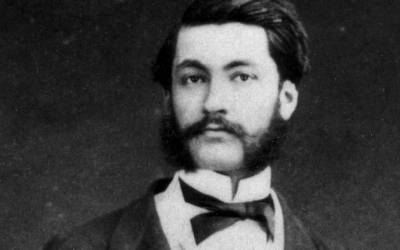
The future inventor was born in 1841 in Metz. He was the son of a French army artillery major. Louis’s father was often not home, so the boy spent a lot of time with the inventor of the daguerreotype, Louis Daguerre.
Louis Le Prince began to study photography and chemistry as a child. It sparked his interest in art and science.
Louis learned painting in Paris and continued his studies at Leipzig University.
Moving to Leeds and the first inventions
Louis Le Prince moved to Leeds in 1866. He was invited there by his college friend John Whitley. In the city, Louis began working at a brassware factory. Three years later, Louis Le Prince married Sarah Elizabeth Whitley. His wife was also an artist, so the couple opened a school of applied arts in Leeds.
In 1884, Prince developed a flexible roll medium that recorded moving images on rolls of paper. Four years later, Louis Le Prince developed a single-lens camera that used a flexible paper roll. This was a real revolution in the field of cinema. This chronophotographic camera has underlain the creation and development of modern cameras. By the way, the inventor first developed a camera with 16 lenses arranged in four rows.
Louis’ other famous invention was electric shutters, which were triggered by an electric battery through a special switch, intermittent movement of the medium, disk shutter, etc. All these inventions allowed Louis Le Prince to create the first films in history. Some of them even survived to the modern period. Those are
- Roundhay Garden Scene. This film was shot in 1888. It lasts only 2.11 seconds and is considered one of the first films in history.
- Traffic Crossing Leeds Bridge. This film shows the movement of cars and pedestrians on Leeds Bridge.
- Accordion Player. It demonstrates an accordionist playing his instrument.
- and Man Walking Around a Corner.
Importantly, Louis received patents for his inventions in England, France and the USA.
Who influenced the inventor?
As it is known, the environment affects our consciousness and further actions. This also applies to Louis Le Prince. After all, he was influenced by several other inventors and their innovations, which contributed to Louis’ further activities. Thus, Eadweard Muybridge, an American photographer, and his series of photographs Horse in Motion greatly helped Louis with his invention.
Very inspiring was also Georges Méliès, a French director and inventor who experimented with editing and special effects. The French inventor was also influenced by Thomas Edison’s first commercial film projects and cameras.
Louis Le Prince was also motivated by the activities of George Eastman, an inventor of roll film, and Michael Faraday, who conducted research in electricity and magnetism. Their studies were later used in cameras and other devices.
Inventor’s mysterious disappearance
Louis Le Prince made a great contribution to the development of cinema but fate wasn’t very kind to him. On September 16, 1890, the inventor disappeared under mysterious circumstances during a trip to Paris. Louis Le Prince was returning from a visit to relatives in Dijon. He planned to go to New York where he was supposed to present his inventions to the public.
On September 16, Louis boarded a train to Paris and was supposed to change to an express to London. However, the inventor never arrived in Paris. He wasn’t found on the train or on the platform. By the way, his compartment was locked from the inside. When people opened it, no one was there. The luggage was also not found. The investigation also gave nothing, since there were no witnesses to the inventor’s disappearance. In general, there were several theories, including suicide due to financial difficulties, murder by his brother over an inheritance or kidnapping by his competitors. However, these were only unsupported theories.
Louis Le Prince was officially declared dead in 1897, seven years after his disappearance.
This is the life story of the famous inventor and his mysterious disappearance. Louis Le Prince undoubtedly made a breakthrough in the world of cinema and left behind a great basis for the development of the film industry.
We hope that our article was informative and you learned more information about the famous person who lived in Leeds.