

Leeds is the economic and financial centre of Great Britain. It is home to large shopping malls, business companies and financial institutions. In past centuries, Leeds was famous for its industrial production. The city had many textile and wool factories. In general, it became an important trading centre due to its convenient location. After all, Leeds is located in the valley of the River Aire. Accordingly, it needed a port for better logistics and trade. In this article, we will tell you more about this page of the city’s life and the history of the port. Learn more at leeds-future.com.
Development of the trading centre and the prerequisites for the port construction
Initially, Leeds was a small settlement but with great potential. In 1207, it received the status of a market town. The new status contributed to its further development and transformation into a country’s trading centre. The river was navigated in 1699, thus connecting the city with continental Europe. That was the beginning of Leeds Port’s history.
The Old Dock was opened in 1770. It was one of the first docks built in Leeds. It became an important place for the transportation of goods. Later, the New Docks provided the opportunity for processing large volumes of cargo and better conditions for shipping.
An important event in Leeds’ history took place in 1774. It was the construction of the Leeds and Liverpool Canal. This canal connected Leeds with the west coast of Great Britain, which opened new opportunities for trade and transportation of goods. The canal was opened in 1816 and thanks to this innovation, Leeds became an important point for the export of textiles, wool and other goods. After all, 50% of English exports passed through Leeds.
How did Leeds change?
As you already understood, the port significantly changed the life of the city. Leeds became home to new enterprises of various industries.
- Textile industry. After the opening of the port, many wool factories began to appear in the city. Entrepreneurs exported their products abroad. Among the famous textile enterprises of that time was Henry B. Smith & Co., a factory specialising in the production of woollen fabrics. It became one of the leading in the region. The Leeds Woollen Company was another famous enterprise engaging in the production of woollen products.
- Machine-building enterprises. In past centuries, Leeds was the centre of the textile industry. Many factories and plants operated there. However, the textile industry also contributed to the development of mechanical engineering. After all, numerous factories and plants needed equipment. Accordingly, enterprises that manufactured textile machines, steam engines and other equipment began to open in the city too. For example, the Armstrong Whitworth company actively produced equipment for the textile industry. The Leeds Machine Works plant manufactured textile machines and industrial equipment.
- Chemical enterprises. Chemical plants also actively operated in Leeds. Barker & Co. was a company that specialised in the production of dyes for the textile industry.
The appearance of the port also affected the population of the city. Many immigrants started to come to Leeds. All of them were looking for a better life and work. Since the textile industry was developing rapidly, there were enough workplaces for everyone. Population growth and the need for food led to the opening of new food factories and processing plants. New educational institutions also began to appear, as Leeds residents wanted their children to receive education in their hometown.
However, the appearance of the Leeds Port also had negative consequences, concerning the ecology. The intensive work of the port and enterprises began to pollute the water and air. Leeds became an industrial centre and wealthy residents started to build their estates outside the city.
Changes in the port infrastructure
Another significant event in the life of the city occurred in 1848. It was the introduction of the railway in Leeds. The railway connection had a positive impact on the city’s economy, as goods began to be delivered to and from the port faster and more efficiently. Besides, the city’s transport infrastructure and roads improved too. After all, Leeds needed new roads and bridges to deliver cargo to the port.
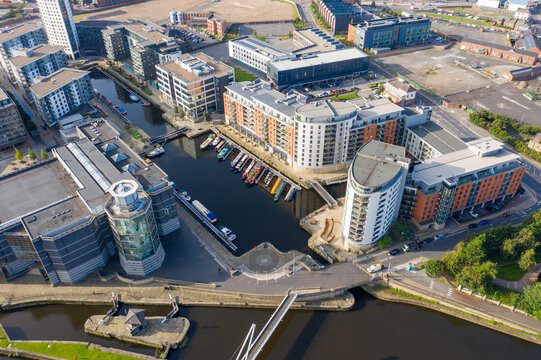
In past centuries, the port infrastructure underwent significant changes. Industry was actively developing and the amount of cargo was increasing. However, after the Second World War, the Leeds Port became less popular. As a result, port facilities were converted into residential and commercial establishments.
The Leeds Port played an important role in the development of business and other spheres. The improvement of the transport infrastructure made trade grow as well as new plants, factories and industries appear.
We hope that our article was informative and you learned more about Leeds.