

Information technology (IT) has become an indispensable part of modern life, permeating every sphere and industry. Consequently, more and more people are seeking IT education to master contemporary professions. Today, we’ll discuss the University of Huddersfield, a public research university near Leeds, known for its IT programs. Next on leeds-future.com.
History of the Institution
The University of Huddersfield traces its origins back to 1825 when local educators aimed to establish a scientific and mechanical institute. Prominent landowner Sir John Ramsden supported this initiative to teach local mechanics and traders basic scientific knowledge. Students were educated through lectures and access to a circulating library.
In 1841, a group of five young individuals proposed a new subscription library alongside foundational education classes. These sessions began with 40 students in a British School room at Outcote Bank, covering subjects like reading, writing, arithmetic, grammar, geography, design, and French.
As the student body grew, the institution moved to Nelson’s Buildings on New Street, and later to a larger facility. By the 1860s, it had gained recognition as a prominent center for technical and scientific education.
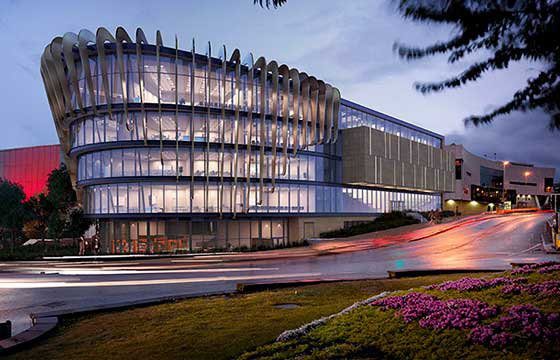
Growth and Development
The institution continued to expand over the years. In 1883, it merged with the local Women’s Educational Institute, forming the Technical School and Mechanics’ Institute. A new building was constructed for this purpose, funded by philanthropists at a cost of £20,000.
In 1896, it was renamed the Technical College, a title it retained for decades. The world wars didn’t hinder the college’s growth. During World War I, it established a government-funded coal tar chemistry faculty with over 100 chemists. During World War II, the college educated evacuated students and members of the armed forces, training them in radio mechanics, engineering, and clerical skills.
In 1970, the Technical College merged with the Oastler College of Education, forming the Huddersfield Polytechnic, officially inaugurated by Margaret Thatcher in 1971. Subsequent expansions included further mergers and campus renovations, leading to its elevation to university status. Today, the University of Huddersfield attracts students from over 130 countries worldwide.
The University of Huddersfield offers a wide range of programs, including a Faculty of Computing and Engineering. Students can pursue courses in computing, information systems, gaming and web development, electrical engineering, mechanical and automotive engineering, and physics. This faculty provides students with both theoretical knowledge and practical skills, ensuring they are well-prepared for the workforce.
The university is home to leading research groups in fields like engineering, biomedical sciences, physical sciences, social sciences, and the humanities. It also boasts the MIAMI lab, a world-class facility for materials science and energy research.
The University of Huddersfield has received numerous accolades, including:
- Entrepreneurial University of the Year (2012) at the THE Awards.
- Outstanding Registry Team (2013) at the THE Leadership and Management Awards.
- University of the Year (2013) at the THE Awards.
- Recognized as the best university workplace in the Times Higher Education (THE) rankings (2014).
- Winner of the Educate North Awards (2015) for University of the Year.
The University of Huddersfield provides high-quality IT education and is a significant draw for international students. Its extensive history, innovative programs, and global recognition make it an ideal destination for aspiring IT professionals.
Have you considered studying at the University of Huddersfield? Share your thoughts!